
“Brittleness” isn’t a new concept. Researchers, engineers, and human factors practitioners have been studying it for years.
At its core, the idea comes from material science.
Some materials are brittle, like glass or ceramics. They snap or shatter under stress with little warning. Others are ductile, they bend, stretch, and show signs of strain before they fail.
A brittle system works… until suddenly it doesn’t. Under pressure (tight timelines, high workload, unexpected events, etc.) it can fail quickly and dramatically.
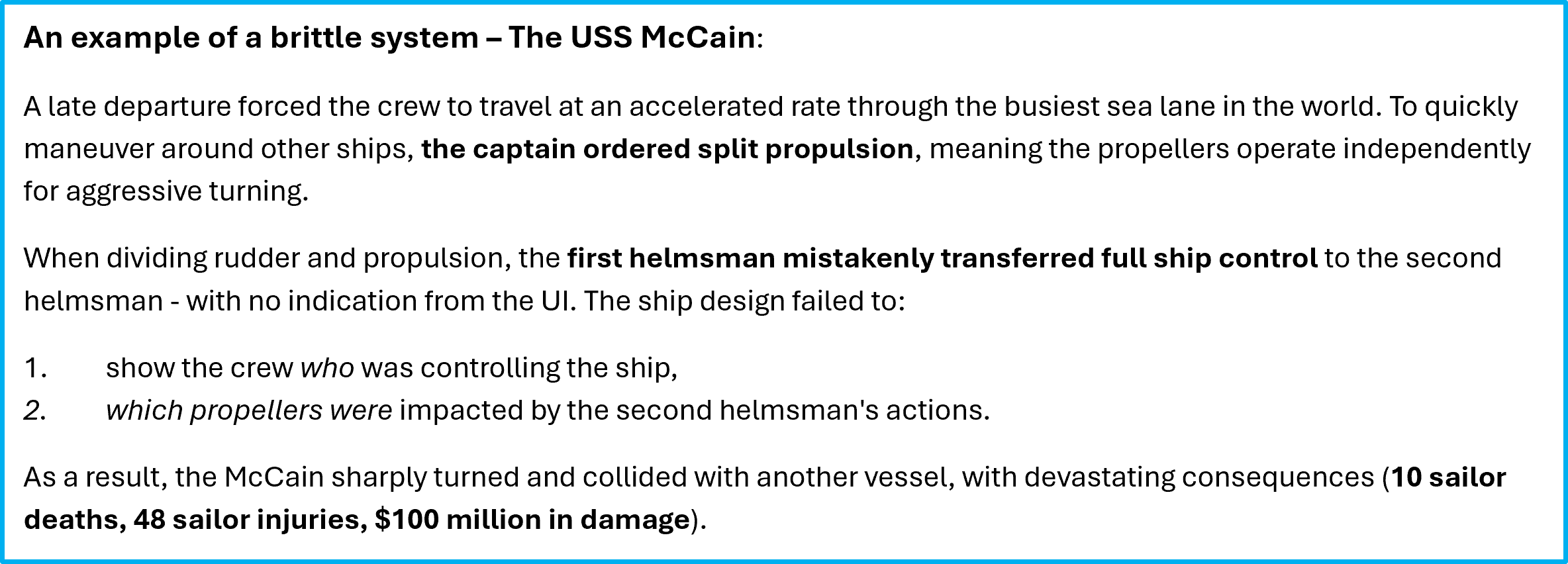
And when it fails, the consequences can be serious:
Increased risk to safety
Missed mission or operational goals
Significant financial and organizational impact
A resilient system, on the other hand, continues to function even under stress. It adapts. It degrades gracefully instead of collapsing.
But if it was easy to create a resilient system, everyone would have already addressed these flaws. The challenge? Brittleness is often hidden.
These weaknesses don’t always show up during normal operations. Traditional testing approaches to validation and verification focus on whether requirements are met and generally ignore these issues. The brittlenesses sit quietly in the system until conditions push things to the edge, then they surface all at once.
But the symptoms of brittlenesses aren’t invisible, they are just often overlooked . Decades of systems research have identified common patterns and warning signs (Joint Cognitive Systems: Patterns in Cognitive Systems Engineering). These are not random issues, they are predictable failure points which means they can be found before they cause problems. But only if your organization chooses to look for them.
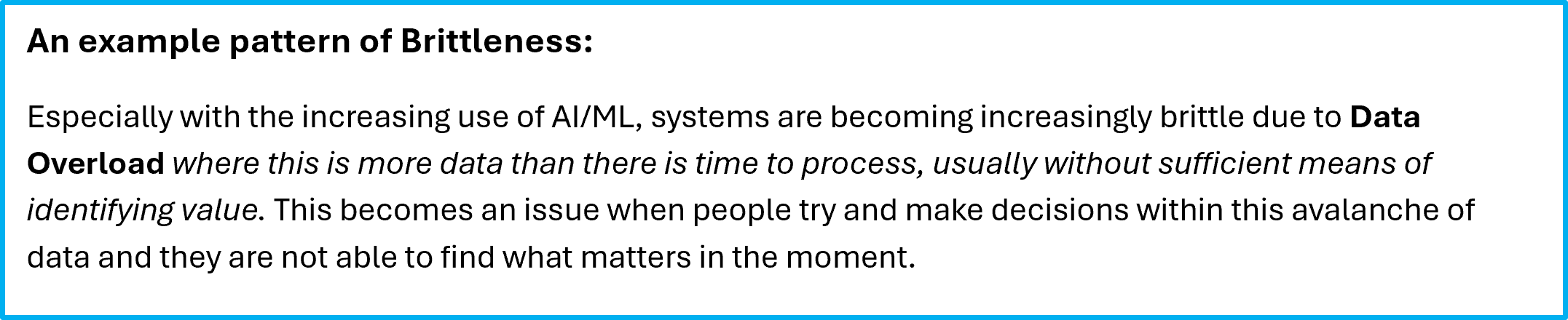
If you can identify brittleness early, you can redesign the system to be more resilient, before it’s tested under real pressure. All systems have brittleness, use RCS’s Brittleness Audit Tool or RCS’s Engineers to help you identify and mitigate these problems early!
Because the goal isn’t to build systems that work perfectly in ideal conditions. It’s to build systems that help users regardless of the conditions they are facing, especially when conditions aren’t ideal.